Saturday, January 12, 2008

One, two, three, four... ONE!

Every time I leave the house, I need to take three things with me - my iPod, my cel phone, and my organizer.  Occasionally I will forget one - usually the organizer or the cel phone.  The iPod is rarely far enough away to forget.  It would be handy to be able to have to remember just one thing to take with me, and of course that one thing would be the iPod, or iPhone.

As of this writing, the iPhone would not be enough anyways, as it is lacking any sort of to-do list feature (and it's not officially available in Canada, anyways). The lack of to-do lists on the iPhone is a great mystery, since you can add, edit and remove calendar events and contacts. On the surface, this seems simple enough to add.

Given Apple's way of doing things, I'm sure when we look back at this oversight, many will see this as foresight.  Perhaps Apple is going to revamp to-do lists in iCal application, for instance. It's also possible that Apple hasn't been able to get to-do list synchronization working to their liking, and will address this in an update.

Anyways, I'm always taking three things with me.  And, if I ever get a GPS unit, that will be four things.  Add my keys and wallet, that's six things I'm scrounging around for before I can leave my home.  I'd really like to see the iPod, phone, organizer and GPS combined into one.  If there's some way to add the wallet in there, as well, I'd consider it. Of course, its more to lose in one shot, but if it's synced with my computer at home, then it's not nearly as disastrous as losing the only copy of your organizer.

It would be nice. And, it's so close to being possible I can almost taste it!

Unified Theory

When the iPhone was announced, I got excited, and immediately wanted to own one.  That feeling dwindled somewhat as time passed, mostly because the iPhone has not been officially released in Canada, yet, and I have grown a little weary of waiting.  Shortly after the iPhone shipped, Apple revamped their iPod line, adding a "fat" nano with 4 and 8 GB of Flash memory, updating the hard-drive iPod with video, and renaming it the iPod Classic (80 or 160 GB storage), and introducing the iPod touch (8 and 16 GB) - think iPhone without the phone.

The response from the Apple blogging community was mixed.  The touch topped out at 16 GB of storage - too small for the amount of video you would want to watch, given the size of the display.  The Classic had the storage, but a small screen.  The nano was seen as more of a 'gateway drug' into the world of iPod with video.

For the most part, I find I agree with these assessments for myself - none of these iPods are what I want.  What I really want, I have decided, is an iPhone with at least 30 GB of storage.  If one does not become available in Canada anytime soon, then I may consider the Touch with the same amount of storage. Given that my current iPod is approaching the 2 year mark, and I have used it pretty heavily, I expect the battery to begin to die sometime this year, assuming I'm in the statistical average.  I watch a lot of video, so it would be great to have more storage, but I can juggle 30 GB pretty well.

In the midst of all these musings about which iPod would be best choice for me, I think I have missed the point.  There is something even more significant going on in the world of Apple, which at first will seem pointless, I'm sure.

The iPhone runs OS X.  So does the iPod touch.  This isn't some other operating system with an OS X-like interface, which is what Windows Mobile is compared to Windows.  From the lowest levels, these iPods are running the exact same OS as the computer on my desktop.  And on the Apple TV, as well.  As a software developer, this has some very interesting implications, the least of which is that I will be able to develop, from one place, applications that will stretch from the small computer in my pocket, to my desktop and possibly into the enterprise.

I can think of at least a couple of very useful applications I would like to have so that I can gather information on my iPod touch or iPhone, keep the data synchronized with my desktop and possibly a workgroup or two.

The iPod touch and iPhone are Apple's future.  That means that the 'nano' and the Classic are probably going to be replaced before too long with something else running OS X.  I'm sure the form factor will be similar to existing models, but I think the days of hard drive-based, non-OS X equipment from Apple, Inc. are numbered.

Friday, September 15, 2006

Door Number Three

I've become a bit of an Apple fan. I can admit that. But, there are some things happening on the horizon that seem too organized to be a coincidence.

This week, Apple introduced several new things: a movie store, new iPods, AND they pre-announced a new HDTV capable video device, code-named iTV. Apple almost never preannounces a product like this, so why now? I think that they just subtly staked their claim in the High Definition market but almost no one knows it, yet. Let me explain...

2006 was supposed to be the year HDTV finally arrived in our homes, but the movie studios seemingly held up the process by splitting into two camps. Behind Door Number One, there's Blu Ray, and behind Door Number Two is HD-DVD. Both look the same, both act the same. Both are competing to be the next generation High Definition DVD format. To hold one in your hand, the average consumer probably wouldn't be able to tell them apart from their old DVDs. But, when you play them in the appropriate player, high-definition entertainment ensues.

This two-camp thing happens almost every time a new technology comes along. The strategy fails more often than not, mostly because it ends up alienating a lot of people who have invested in the format that doesn't survive. Some studios are hedging their bets and offering their movies in both formats. This way, they get to sell it to you twice if you pick the wrong one. Personally, I think consumers are tired of being forced to adopt every new format that comes along. What many consumers seem to want is something reliable and easy to use, and hey, if it's cool, that's even better.

Back to my point - When Steve Jobs took the stage this week and made his preannouncement, he mentioned a new feature on the iPod that does somethng Apple has never endorsed before. Instead of always having to sync your iPod content from a computer into the iPod, and not the other way around, you can now have two computers authorized with the same account on the iTunes Store, and your purchased content will automatically sync up from your iPod to both computers. Great idea, huh? Stay with me...

When HDTV formatted movies are released, they will be 4-6 times larger than the movies that are available to us now, so it will take at least 2-6 HOURS to download one movie. Not an exciting prospect. But earlier this year, the rumor mill was abuzz with stories of Apple and BlockBuster talking to one another about some sort of deal. So, here is what I think may happen....

Imagine walking into BlockBuster, purchasing a high definition movie, popping your iPod into the kiosk and downloading your High Def movie in a couple of minutes. Then, imagine driving home and syncing your iPod with your computer. Now that movie is on your computer and you're able to play it on your home theatre system via the Apple iTV device. No HD-DVD or BluRay in sight.


Which brings me to my conclusion: there's an iPod behind Door Number Three.

Tuesday, August 29, 2006

Penguins... in... SPACE...


I like space exploration. I've often dreamt of visiting Mars. In fact, I even tried to convince my wife that we would have a great time being one of the first families to colonize Mars (she hasn't bought into it, yet)!

So when I heard a recent podcast by Jerry Fiddler (here's the link: runtime 1h 33m) I was fascinated. His company, Wind River, supplied the Unix-like operating system for the Mars Rover and he has fascinating insights into the value of low-cost, off-the-shelf (or even free) software in the service of space exploration. Visions of an army of penguins roaming over the mighty red vistas of Mars was strangely appealing...

Some of you might be wondering, with Linux being available for free, how could NASA refuse to use it in their space program? Well, it turns out they haven't refused. In fact, the computer used to send commands to the Beagle 2 Mars Lander from Earth runs a variation of Linux.

I've heard someone, somewhere say its very cold in space... and penguins like the cold. Seems like a match made in heaven to me! NASA must agree, since they're clearly planning on using some Linux in their next generation flight systems.

It's only a matter of time until I get to see penguins in space!

Wednesday, August 02, 2006

Shh... the "pommes" are listening!

I'll admit it. I'm a switcher, and I don't regret making the switch. I was the stereotypical programmer who believed that Macs were all style and no substance. And, I think what finally convinced me to take a closer look whas when I saw bit of sleight of hand. I had clicked some option, the computer responded and I couldn't see immediately how the screen had changed. Usually a new window pops on screen, shouting its arrival to the world. But not here. The effect was subtle, effective and beautiful. Since then, it's been a positive experience all around. With one possible exception. I've noticed that Mac fans tend to be obsessed with rumors.

They're incessant. They're everywhere. And they seemingly go on and on. On the one hand, it's interesting and strangely addictive. But, on the other hand, they can become tiresome, mostly because I've been down this road before.

Back in the day, I was an Amiga fan, and (this will date me) the Amiga 2000 was my 2nd computer (the Commodore 64 being the 1st). Ahhh... the Amiga... It was beautiful graphics and sound, ran more than one program nicely at the same (called multitasking) and did video and videogames like nothing else at the time. I tried to convince everyone that they should get one, and that the way Commodore did things was just better. And, to tell you the truth, when compared it to what else was available at the time, it was a lot better. :)

But, I have learned that being better doesn't necessarily translate into sales. Just being better couldn't save Commodore because they never found a way to achieve the repeat sales they needed to keep going. It seems you always have to be prepared to unveil the 'next big thing' when the time is right.

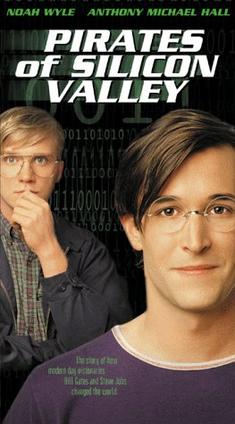
The movie / documentary "The Pirates of Silicon Valley" delves into the intense competition in the industry. The film illustrates the feud between Bill Gates (Microsoft) and Steve Jobs (Apple). In the final scene, Jobs confronts Gates (who has just saved Apple with a huge infusion of cash), insisting that the Mac is better. Bill retorts that Jobs just doesn't get it - and that his software is on nearly every computer out there. According to the film, these two mavens (or moguls?) have different definitions of success: Jobs is about the quality of the experience, and Gates is about numbers. Jobs' set out to create a computing experience that is artful, delightful, fun and almost invisible. Gates' set out to get Windows on every device imaginable.

Both achieved their goals. And, the general consensus seems to be that the world is a better place because of Apple, and that the world is a more dangerous place because of Microsoft Windows.

Maybe that's why Apple has spawned such loyal consumers. Based on the kinds of sales numbers Apple is reporting, they have achieved the kind of success that should help them avoid the fate of Commodore, while providing the kind of computing experience that continues to inspire passion in Mac users.

Since Apple attracts the "creative" people, I guess its natural that these people would be eager to dream about the next new thing Apple will unveil. The many rumor sites are a natural outgrowth of this passion.

And I'll probably keep eagerly reading them.

Tuesday, July 25, 2006

What's Penginus Got To Do With It?

I don't know how it started. Maybe because my sister used to refer to them as "ping wings" when we were kids. Maybe its the way they walk, waddle, slide and jump up and down. Maybe it's the way they always look like they're dressed for a formal occassion. But, somewhere between my younger years and now, I developed a real affinity for the nutty creatures!

As long as I can remember, I've had an interest in computers. Sometime along the way, the Linux operating system appeared, and they adopted Tux the Penguin as their logo. How often do two things you have an interest in come together? How could I resist?

Have you heard of Linux? It came out of nowhere (well, Finland, technically) initially developed by Computer Science student Linus Torvalds, who had an interest in operating systems He wrote the lower layer stuff as a hobby, and then posted the source code (the secret recipe) on the Internet. Other people started to contribute to it, and they recruited some friends, who recruited some friends, and so on, and so on... and before you could say "Bill Gates is a billionnaire" the free software movLinux Torvaldsement took off and Linux was born.

As the mighty army of Linux volunteers worked on developing the software, adding features, fixing bugs, and writing documentation, corporate resistance to adopting Linux in the enterprise continued. (Unofficially at the time its use was rampant, but one story at a time!)

In 1996 Linus started a competition to create a logo for Linux to try to soften the image for the corporation. It was felt that Linux was too geeky for anyone outside the server room to care about. Certainly the president of a company was being told by the likes of Microsoft that Linux was risky, buggy, unreliable and unsupported. (Talk about the pot calling the kettle black... so many tempting rabbit trails... sigh...) Apprently, it was known that Linus had a fixation for flightless, fat waterfowl. :) One of these volunteers, Larry Ewing designed a logo that would be cute, but also corporate. That's how Tux was born.

And it worked! Or, it helped, at any rate. By the time 1999 rolled around, Linux had captured 28% of the public Web server market. Today, Linux by far outpaces every other operating system on the Internet. Google uses it for their search farm of thousands of servers. The place where I work uses it for all their servers. The place where I used to work is reportedly replacing as much of what they have with Linux servers.

Fast forward to today, and now Linux has large and growing share of the desktop, too. And the penguins are just as popular.

Saturday, July 22, 2006

Oh, Penguin, Where Art Thou?


The Pengiuns are everywhere. They're in your computer. They're in the antarctic. They're on the march. They have happy feet. And Wallace and Grommit were almost (almost) defeated by one!